

Posted on 15/06/2026 by Amelia Armson
What is ROI in Digital Marketing? (How to Calculate & Maximise Marketing ROI)
Understand, calculate, and improve your marketing ROI with real-world strategies, formulas, and industry benchmarks.
Introduction to ROI in Digital Marketing
Digital marketing ROI is no longer just about clicks, traffic, or last-click conversions. In 2026, the rules have shifted considerably, and for most UK businesses, the old ways of measuring success simply aren’t keeping up.
Three things are driving this change.
- First, AI-driven discovery. More consumers are now finding products and services through AI-powered search tools, assistants, and recommendation engines. The traditional path, search, click, convert, is becoming less predictable and less trackable.
- Second, customer journeys have become genuinely complex. A prospect might discover your brand on TikTok, research you via an AI overview, read a case study on your website, and then convert after receiving an email, weeks later. Attributing that sale to a single channel tells you very little about what actually worked.
- Third, the tracking tools businesses have relied on for years are under pressure. Privacy regulations, browser restrictions, and the decline of third-party cookies have created real gaps in conversion data.
Many businesses are making budget decisions based on figures that are, at best, incomplete. What this means in practice is that ROI hasn’t become less important; if anything, there’s more pressure than ever to prove that marketing spend is working. But how you measure it, attribute it, and act on it needs to evolve.
This guide is built around that question: not just what ROI is, but how it’s changing, and what businesses need to do differently to stay ahead.
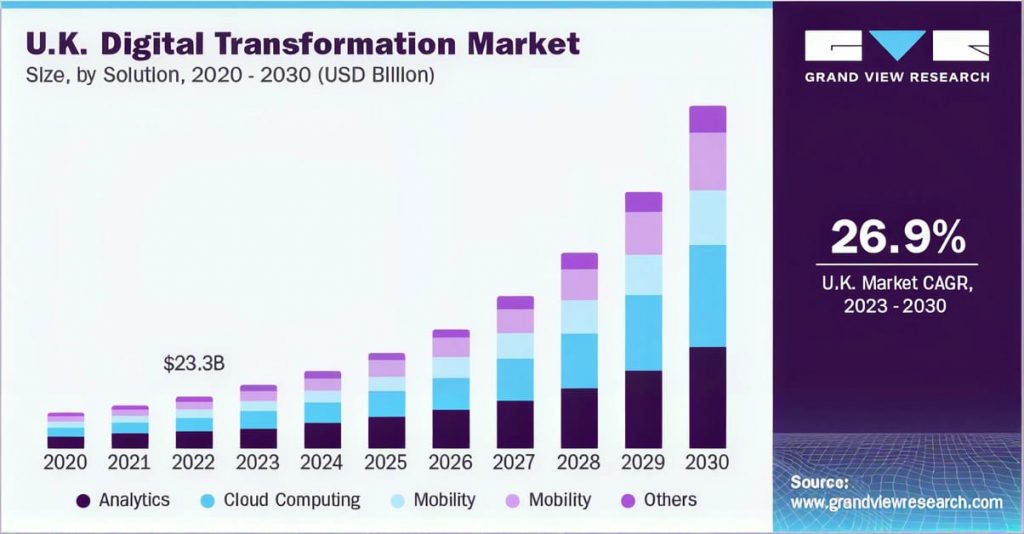
Source: Grand View research
What is ROI in Digital Marketing?
ROI in digital marketing is the measure of profit generated from marketing activities compared to the cost of those activities. It shows how effectively your marketing spend turns into revenue.
ROI = (Revenue – Cost) ÷ Cost × 100
How to Calculate Marketing ROI
Calculating marketing ROI allows you to understand how effectively your marketing spend is generating revenue. It helps you identify which campaigns are profitable and where to optimise your budget.
Step 1: Determine Your Total Marketing Cost
Start by calculating the full cost of your marketing efforts. This should include:
- Ad spend (Google Ads, social media ads, etc.)
- Agency or freelancer fees
- Software and tools (e.g., CRM, automation platforms)
- Content creation costs
Having a clear view of your total investment ensures your ROI calculation is accurate.
Step 2: Track Revenue Generated
Next, measure the total revenue generated from your marketing campaigns. This can include:
- Direct sales from ads or email campaigns
- Leads converted into customers
- Assisted conversions across multiple touchpoints
Use tools like Google Analytics, CRM systems, or attribution platforms to track this data reliably.
Step 3: Apply the ROI Formula
ROI = Revenue-CostCost x Cost
This formula gives you the percentage return on your marketing investment.
Example:
If you spend £1,000 on a campaign and generate £5,000 in revenue:
- Profit = £4,000
- ROI = 400%
This means you earned £4 for every £1 spent.
Step 4: Analyse and Optimise
Once calculated, use ROI insights to:
- Scale high-performing campaigns
- Reduce spend on underperforming channels
- Improve conversion rates through testing
Consistent tracking and optimisation are key to maximising long-term marketing ROI.
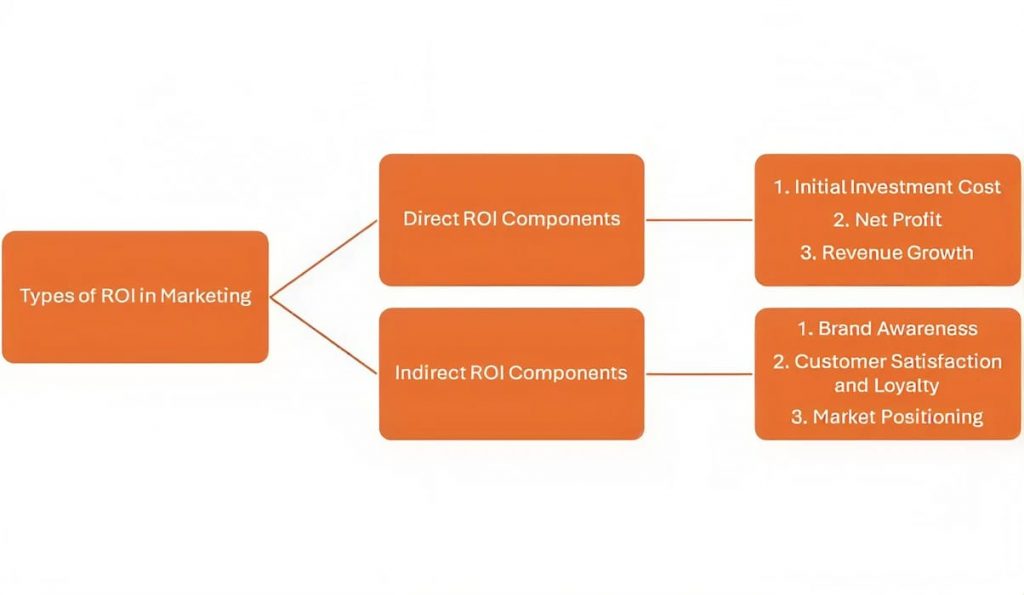
Types of ROI in Marketing:
Direct ROI
These are immediate returns tied to specific campaigns and actions. For example:
- Revenue generated from Google Ads campaigns.
- Sales driven by targeted email marketing campaigns.
- Purchases attributed to strategic social media marketing initiatives.
Indirect ROI
These represent benefits that materialise over time, such as:
- Enhanced market authority via thought leadership and consistent digital marketing campaigns.
- Brand awareness and market positioning improvements through sustained content marketing efforts.
- Growth in customer loyalty and lifetime value from nurturing campaigns.
Source: Loop Digital
Industry-Specific ROI Insights
Different industries in the UK experience varying levels of ROI from digital marketing due to factors such as target audience demographics, sales cycle length, and the effectiveness of specific marketing channels. For instance, a B2B tech company may achieve higher returns through LinkedIn advertising, whereas a retail fashion brand might see better engagement on Instagram.
E-commerce:
- Overall Performance: E-commerce sales on the IRP platform experienced a 16.01% year-over-year increase in December 2024.
- Food & Drink: Revenue per visitor in the Food & Drink e-commerce market increased by 12.00% from £1.03 to £1.15 in January 2025, compared to January 2024.
- ROI Calculation: The formula for calculating e-commerce ROI is: E-commerce ROI (%)
= [(Net profit – Marketing Expenses)/ Marketing expenses] х 100. A good ROI for e-commerce generally means earning at least £2 to £3 in revenue for every £1 spent on marketing, which translates to an ROI of 200% to 300%.
B2B Services
- General ROI: A B2B digital marketing ROI of 5:1 is a good target, meaning a revenue that’s 5 times the marketing spend. An ROI of 500% is considered very good, and 1000% would be exceptional for most companies.
- ROI Calculation: The ROI calculation formula is:
[(Return – Expenses)/ Expenses] х 100 = ROI (expressed in percentage).
Financial Services
- Maximising ROI: Maximising ROI in financial services marketing is crucial for making informed decisions on allocating funds. Personalising marketing can reduce Customer Acquisition Cost (CAC) by up to 50% and increase overall ROI by 10-30%.
- Omnichannel Approach: The most effective marketing strategies take an omnichannel approach, reaching prospective customers across multiple platforms.
Hospitality & Travel
- Hotel Market Outlook: The outlook for the UK hotel market suggests a generally positive picture, although below-average UK GDP growth of 1.6% could dampen domestic business and leisure demand. A weakening pound could boost inbound tourism.
- Regional UK Hotels: Regional UK hotels achieved a seven-percentage point uplift in occupancy and 3.5% growth in Average Daily Rate (ADR) for the 12 months ending September 2023. This resulted in strong room revenue growth, with a 15% uplift in Revenue per Available Room (RevPAR).
- London Hotels: London’s transient segments accounted for 72% of the total rooms.
Retail
- December Sales: E-commerce sales on the IRP platform saw a 16.01% year-over-year (YOY) increase in December 20241. This outpaced the wider UK economy.
- 2025 Forecast: 2025 is expected to be a difficult year for retail, but there are international opportunities for merchants who remain profitable and seize the opportunity to grab market share.
Why ROI is the Ultimate Performance Metric
ROI’s definition of marketing underscores its role as a key indicator of how marketing investments align with business objectives. Measuring ROI in marketing helps businesses to:
- Prioritise high-impact campaigns: Focus resources on initiatives that consistently yield strong results, like those with high conversion rates.
- Allocate budgets efficiently: Ensure marketing spending is channelled towards areas that generate the best outcomes, such as Google Ads or high-performing social media marketing strategies.
- Drive sustainable growth: Build strategies around return on investment digital marketing, ensuring long-term profitability.
Average ROI on Digital Marketing and Future Trends
The average ROI on digital marketing varies across industries, but studies indicate it often ranges from 4x to 10x the initial investment. By implementing data-driven marketing strategies, businesses can stay ahead of the curve, ensuring they measure marketing ROI effectively and adapt to evolving consumer behaviours.
Case Studies on the Return on Investment in Digital Marketing in the UK
Digital marketing has proven to be a powerful tool for businesses in the UK, allowing them to enhance their visibility, engage with customers, and ultimately drive revenue. The best way to understand it is by analysing the success stories of real organisations that have invested in Digital Marketing and got impeccable results:
Case Study 1: BD Oncology
BD Oncology, a division of a global medical technology leader, faced the challenge of communicating its innovative oncology care solutions amidst a complex healthcare landscape. To address this, they invested in developing a comprehensive digital marketing strategy aimed at generating leads and enhancing their market presence.
- Leads Generated: 13,000 valuable leads across Europe
- Potential Order Value per Lead: £250k to £2m
- Estimated Contribution to Bottom Line: £2 billion within the next two years
A multi-faceted inbound marketing campaign that included SEO, PPC advertising, social media marketing, and content creation was implemented. By focusing on persona development and understanding the specific needs of healthcare professionals, BD Oncology successfully positioned itself as a trusted partner in oncology care. The campaign not only generated a substantial volume of leads but also set the stage for significant revenue growth, demonstrating the effectiveness of tailored digital marketing strategies in a specialised industry.
Case Study 2: Bluebell IT Solutions
Bluebell IT Solutions sought to revamp its online presence by improving website performance, content quality, and SEO. They aimed to transition from a bulky website builder to a lightweight theme that would enhance user experience and maintain SEO integrity.
- Website Performance Improvement: Transitioned to a lightweight theme without excessive plugins
- Enhanced Content Representation: Updated website content accurately reflecting services offered
- SEO Optimisation: Successfully transferred SEO content with proper redirects
The new website design not only improved load times but also provided a seamless browsing experience across devices. By focusing on user-centric design and effective communication strategies, Bluebell was able to attract more clients and improve engagement with existing customers. This case illustrates how investing in website design and functionality can yield significant returns through increased traffic and customer satisfaction.
Case Study 3: Brand Identity and Website Functionality
PCM Transport Equipment, a company focused on enhancing its brand identity and website functionality, sought to establish a stronger online presence. The project involved comprehensive branding efforts alongside digital marketing strategies aimed at improving user engagement and conversion rates.
- Brand Recognition Improvement: Enhanced visual identity leading to greater brand recall
- User Engagement Increase: Improved website functionality resulted in higher user interaction
- Conversion Rate Growth: Notable increase in conversions post-launch
Through strategic branding initiatives and an optimised digital platform, the company successfully differentiated itself in a competitive market. The investment in brand identity and website functionality not only elevated their market position but also contributed significantly to their overall ROI.
ROI Optimisation Checklist
Use this checklist to ensure your marketing efforts are consistently delivering strong return on investment and driving measurable business growth:
Define Clear, Measurable Goals
- Set SMART objectives (specific, measurable, achievable, relevant, time-bound)
- Align marketing goals with revenue outcomes
Track the Right Metrics
- Monitor conversion rates, cost per lead (CPL), and return on ad spend (ROAS)
- Focus on revenue-driven KPIs, not just traffic or impressions
Understand Your Audience
- Build detailed buyer personas based on real data
- Segment audiences for more targeted and relevant campaigns
Focus on High-Intent Channels
- Prioritise platforms and keywords that drive conversions
- Allocate more budget to campaigns with proven ROI
Optimise Campaign Performance
- Run A/B tests on ads, emails, and landing pages
- Continuously refine messaging and targeting
Improve Conversion Rates (CRO)
- Optimise landing pages for speed, clarity, and usability
- Use strong CTAs and reduce friction in the user journey
Leverage Data and Attribution
- Use multi-touch attribution models where possible
- Integrate CRM and analytics tools for accurate tracking
Invest in High-Quality Content
- Focus on authority-driven, valuable content over volume
- Create content that answers real user questions
Use Automation and AI Tools
- Implement marketing automation for efficiency and scalability
- Use AI insights for predictive targeting and optimisation
Continuously Review and Scale
- Cut or refine underperforming strategies
- Double down on high-performing campaigns
FAQs
1. What is ROI in marketing?
ROI in marketing refers to the return on investment generated from marketing activities. It measures how much revenue your campaigns generate compared to the cost of running them.
2. How do you calculate marketing ROI?
Marketing ROI is calculated using the formula:
ROI = (Revenue – Cost) ÷ Cost × 100.
This shows the percentage return you earn for every pound spent on marketing.
3. What is a good ROI in digital marketing?
A good ROI in digital marketing typically ranges from 4:1 to 10:1, meaning you generate £4 to £10 in revenue for every £1 spent. However, this varies by industry and channel.
4. Why is ROI important in marketing?
ROI is important because it helps businesses understand which marketing strategies are profitable, allowing them to allocate budgets more effectively and maximise growth.
5. Which marketing channel has the highest ROI?
Email marketing often delivers the highest ROI, followed by SEO and content marketing. However, the best-performing channel depends on your audience and business model.
6. How can I improve my marketing ROI?
You can improve ROI by targeting high-intent audiences, optimising conversion rates, using data-driven insights, and continuously testing and refining your campaigns.
7. What metrics should I track for marketing ROI?
Key metrics include conversion rate, cost per acquisition (CPA), return on ad spend (ROAS), customer lifetime value (CLV), and overall revenue generated.
8. How long does it take to see ROI from digital marketing?
ROI timelines vary by channel. Paid ads can generate results quickly, while SEO and content marketing may take 3–6 months to show measurable returns.
Feel the Loop difference for your marketing strategy!
Unlock your business’s true potential with Loop Digital—the marketing agency that delivers results, not just promises. Our expert team is dedicated to creating innovative strategies that drive measurable growth through cutting-edge digital marketing, compelling content creation, and relentless ROI optimisation. We don’t just market your brand—we make sure every pound you invest works harder for you.
Take the guesswork out of your marketing and gain a clear, actionable plan tailored to your goals. Our free 30-minute consultation is your first step toward more leads, better conversions, and sustainable business growth.
Claim your free consultation today and start turning your marketing investments into real, lasting success. Contact us today!
Looking for your next opportunity?
Digital marketing careers
We’re always on the lookout for talented individuals to join our ever growing team. If you think you’d be a great match for Loop Digital, we’d love to hear from you.









Join 300+ business owners getting weekly growth strategies - subscribe now.
"*" indicates required fields