Let’s face it, running a business in Northampton isn’t easy. You’re up against competitors, both local and online, all fighting for the same customers. Maybe you’ve already invested in a slick-looking website, but it’s still not bringing in enough leads or enquiries. You’re left wondering, “What am I missing? ”
The answer could be simple: on-page SEO.
If your website isn’t optimised properly, Google might not even realise what your business does, let alone show it to potential customers. That’s where on-page search engine optimisation comes in. It’s the art and science of fine-tuning your website so it ranks higher, attracts the right visitors, and converts them into paying customers.
What Is On-Page SEO?
Before diving into tips, let’s clear up what on-page SEO actually is.
On-page SEO, also known as onsite SEO, refers to optimising the elements within your own website, such as content, page titles, meta descriptions, images, and internal links, to help search engines understand your pages and rank them for relevant searches.
It’s different from off-page SEO, which focuses on things outside your site, like link building. Think of on-page SEO as the foundation. Without it, your site won’t perform well, no matter how many backlinks you build or ads you run.
Why On-Page SEO Matters for Northampton Businesses
Here’s the truth: Northampton has a thriving local business scene, from independent cafés and retail stores to tech firms and tradespeople. But this also means fierce competition. When local people search for “accountants near me” or “best hair salon Northampton”, Google decides which websites deserve to show up first based on hundreds of page factors, and most of them are on-page SEO factors.
If your competitors’ sites are optimised and yours isn’t, they’ll appear above you, stealing your traffic and potential customers.
Good on-page SEO helps your website:
Rank higher on the search engine results page (SERP)
Match search intent: what users are really looking for
Improve user experience, keeping visitors on your page longer
Convert more leads by providing clear, relevant information
At Loop Digital, we often meet Northampton business owners who say, “We’ve got a great website, but no one finds it.” Nine times out of ten, it’s because their on-page SEO optimisation hasn’t been done properly.
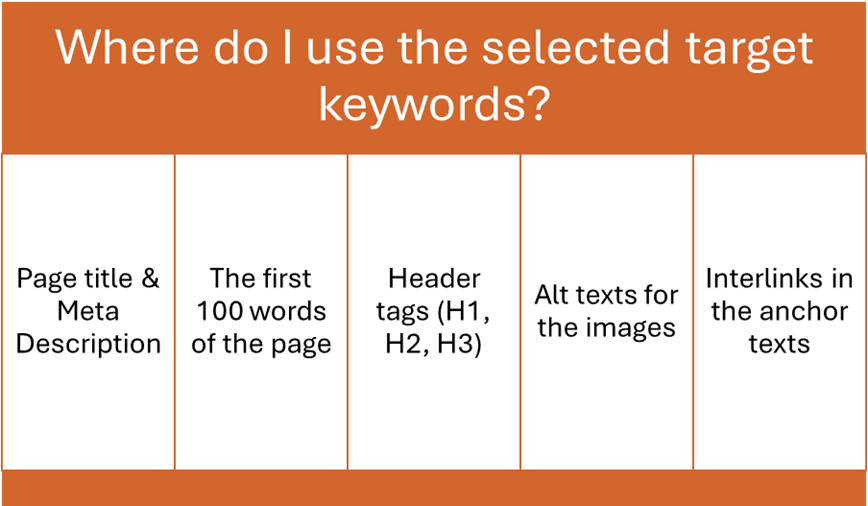
1. Start with Keyword Research That Matches Local Search Intent
For example, a Northampton plumber might assume “plumber” is enough, but most people actually search for “emergency plumber Northampton” or “affordable plumbing services near me”.
Using the right target keywords helps your pages rank higher for the right audience. It’s not about stuffing your page with words; it’s about understanding search intent, what your ideal customer wants to find.
2. Craft Click-Worthy Title Tags and Meta Descriptions
Your page title and meta description are like shopfront signs for your website. They’re the first things people see in Google’s search results, so make them irresistible.
A good title tag should:
Include your target keyword (e.g. “On-Page SEO Tips for Northampton Businesses”)
Stay under 60 characters
Be compelling enough to make people click
Your meta description should summarise the page in 155–160 characters, include a relevant keyword, and tell users exactly what they’ll gain by visiting your page.
Example:
Meta Description: Boost your Northampton business with expert on-page SEO strategies. Learn how to rank higher, attract more local customers, and grow online with Loop Digital.
Page Title: On-Page SEO Strategies for Northampton Businesses | Loop Digital
These small elements play a big part in page optimisation, helping search engines and users understand what your content is about.
3. Use Header Tags to Organise and Optimise Your Content
Google loves structure, and so do your readers. Using header tags (H1, H2, H3) correctly makes your content easier to read, improves user experience, and helps search engines interpret the hierarchy of your information.
Your main title should always be an H1, containing your target keyword. Then, use H2s and H3s to break your page into clear, skimmable sections.
For instance, if you run a Northampton-based cleaning business, your H2 might be “Eco-Friendly Cleaning Services in Northampton”, with H3s for each service type.
Headings and their explanation
Header Level
Tag Example (Including Target Keyword)
Purpose
H1 (Main Topic)
Expert Cleaning Services Northampton
Defines the main topic of the entire page and includes the core geographical keyword.
H2 (Main Section 1)
Eco-Friendly Residential Cleaning
Breaks the page into a major, relevant service category.
H3 (Sub-Section)
Deep Cleaning Packages for Homes
Provides detail under the H2, making the specific service easy to find and skim.
H3 (Sub-Section)
Weekly & Fortnightly Service Options
Another specific detail or offering within the Residential Cleaning category.
H2 (Main Section 2)
Commercial Cleaning Services
A second major service category on the page.
4. Optimise Your Content for Relevance and Readability
Content remains king — but relevance is the crown.
Search engines now prioritise content that provides real value and matches search intent. That means writing for people first and search engines second.
Here’s what strong on-page content includes:
Unique, informative copy (no duplicate content!)
Natural keyword placement; no stuffing
Internal links to related pages
Engaging tone that reflects your brand voice
Your content is the fuel that powers your entire SEO engine. Without high-quality, relevant content, Google has nothing meaningful to index, understand, or rank. By focusing on creating valuable, readable information, you not only improve the user experience (which Google loves) but you also establish your business as a trusted authority. This synergy between quality writing and technical placement is what drives organic traffic, leads, and long-term success.
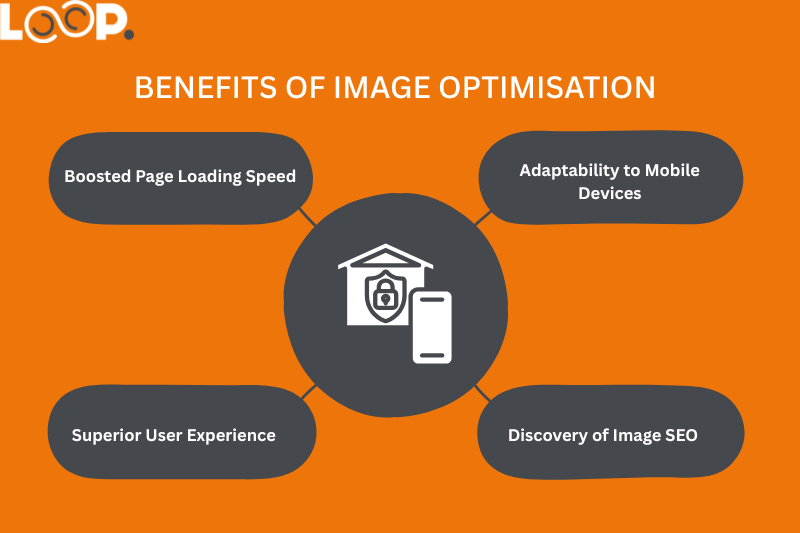
Images add visual appeal and help break up text, but they can also slow your site down if not optimised. Most unoptimised images taken straight from a camera or a stock site have massive file sizes (measured in MBs) and high resolutions that are far larger than what a typical screen can display. When a user loads your page, their browser has to download the entire file before displaying it.
If your page contains several large, high-resolution images, the total data the browser has to fetch quickly balloons (e.g., to 5MB, 10MB, or more). This process takes time, especially for users on slower internet connections or mobile data. The result is slow page loading, which frustrates visitors (leading to high bounce rates) and hurts your SEO ranking, as Google penalises slow-loading websites.
To make your site more SEO-friendly, ensure every image includes:
Alt text describing the image (use relevant keywords when possible)
Compressed file sizes for faster loading
Descriptive filenames (e.g., “northampton-digital-marketing-agency.jpg” instead of “IMG001.jpg”)
These simple tweaks enhance accessibility and help search engines understand your visuals — improving your on-page SEO factors.
6. Use Internal Links and Anchor Text Strategically
Internal links help guide users (and Google) through your website. They connect related content, keep visitors engaged, and distribute link authority to important pages. Think of internal links as the signposts within your website. They are absolutely crucial because they guide both your visitors and Google’s robots through your content, ensuring nothing important is missed. They connect related pieces of information, keep users engaged longer, and share the ‘ranking power’ you build across your most important pages.
The Key is the Anchor Text:
The anchor text is the clickable word or phrase you use (e.g., the words “our Northampton SEO services”). It acts as a clear label for the page you are sending them to.
Simple Example:
If you write a blog post about “local SEO tips”, you wouldn’t just link the word “click here”. Instead, you would use a specific phrase like, “If you’re ready to implement these tips, learn more about our Northampton SEO services.”
This link achieves two things instantly:
For the user: It tells them exactly what they will find on the next page.
For Google: It confirms that the page being linked to is highly relevant for searches about “Northampton SEO services”.
Duplicate content, whether that’s text copied from another source or too many identical pages within your own site, is a major red flag for search engines. It can severely confuse Google, which impacts the local seo negatively. Which then struggles to decide which version of the content is the original or most relevant, potentially leading to neither page ranking well.
The Double Negative Impact: SEO and E-E-A-T:
General SEO Harm: Duplication dilutes your ranking power. Instead of concentrating authority on one strong page, you spread it across multiple identical versions, making it much harder for Google to rank any of them effectively.
Local SEO & E-E-A-T: For a Northampton business, this is doubly damaging. Google uses metrics like E-E-A-T (Experience, Expertise, Authoritativeness, and Trustworthiness) to gauge quality. If your site features generic, copied text, Google will naturally view your business as less authoritative and less trustworthy than a competitor that offers unique, locally focused insights. Your local relevance suffers because you aren’t proving that you truly understand the specific needs of the Northampton community.
A huge part of successful on-page SEO for small businesses is simply giving your visitors a genuinely great user experience. Google knows that if people leave your site immediately (a high bounce rate), it’s probably because they didn’t like what they saw, regardless of how high you ranked.
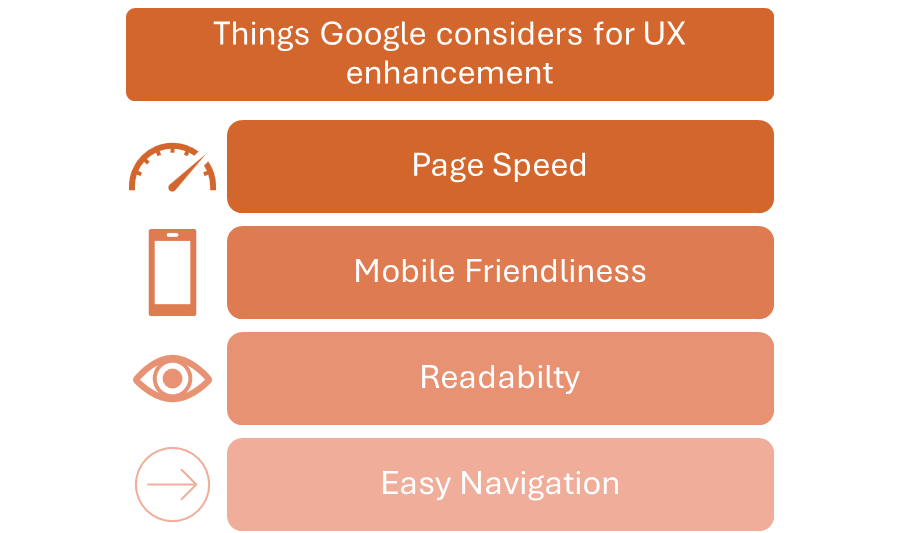
Google now considers factors like:
Page speed
Mobile-friendliness
Readability
Easy navigation
When a customer in Northampton uses their phone to search for a plumber or a solicitor, they need immediate, flawless access to your contact information and services. If your site is slow, requires constant pinching and zooming, or if the phone number is hard to find, that customer will immediately hit the back button and call your competitor instead. Poor UX kills local leads instantly.
As a Northampton business, local visibility is your biggest asset. Your content needs to scream, “We are right here!” to Google and to potential customers nearby. Don’t rely on generic terms; you need to integrate local keywords naturally throughout your entire site, such as specific phrases like “Northampton digital agency” or “best SEO company in Northampton”.
Beyond keywords, you must include your full address, phone number, and opening hours consistently across your website and every single online directory (especially your Google Business Profile). This is how Google confirms your physical presence and service area. If these details are wrong or missing, you won’t show up in local map results or “near me” searches.
10. Measure, Refine, Repeat
On-page SEO isn’t a task you complete and forget; it’s a commitment to continuous improvement. Search engines evolve constantly, Google updates its rules regularly, and your competitors are always trying to steal your rank. If you stop monitoring, you will fall behind.
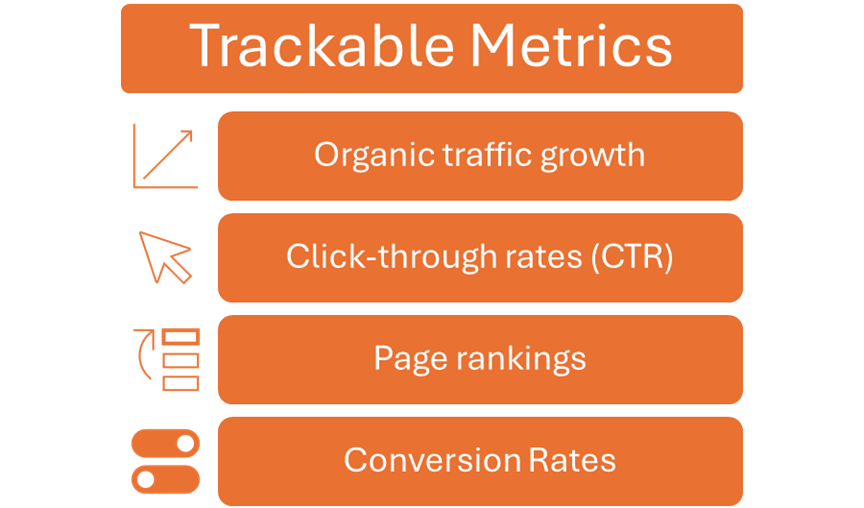
Regularly reviewing your site’s performance using essential tools like Google Analytics and Search Console is non-negotiable. You need to know what’s working and what isn’t.
11. AI and Search: Why Your Website Needs to Be Ready Now
There’s a massive change happening right now in how people find information online, and it’s all powered by AI.
If you’ve ever used tools like ChatGPT or seen those new, instant answer boxes right at the top of Google searches (called AI Overviews), you’ve witnessed it. Instead of scrolling through ten blue links, people are getting quick, simple summaries that pull their answers from trusted, well-organised websites.
So, What Does This Mean for Your Northampton Business?
It means your on-page SEO, the little tweaks we make to your website, isn’t just a nice-to-have anymore; it’s an absolute must-have.
AI tools are picky. They don’t just grab random text; they analyse your site for three key things: relevance, clarity, and credibility.
The Benefit: If your website is properly optimised, the AI is much more likely to pull from your content and feature your business in its summary. You get a huge visibility boost right at the top of the search results without paying for a single ad.
AI Overviews: Winning the Local Search Game
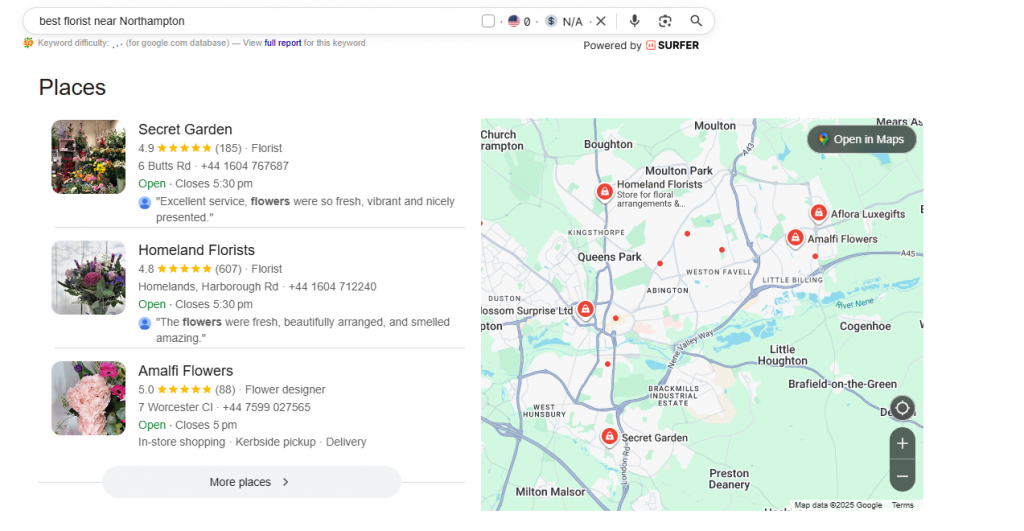
Imagine someone in Northampton searches for something local, like “best coffee shop near Abington Street” or “affordable florists in Wootton”. Google’s AI Overview might pop up first, summarising the top local options.
These summaries are fuelled by sites Google trusts, the sites that have done their homework on on-page SEO.
This is your moment. If your pages:
Clearly define the services you offer (e.g., “Best florists near Northampton”).
Use local keywords and clear headings that the AI can easily read.
They are set up to give the user exactly the information they’re searching for.
This doesn’t just help you rank higher in the old search results; it actively positions your Northampton business as a verified, credible answer in the new era of search.
The importance of AI Overviews
Common SEO Frustrations We Hear from Northampton Businesses
We get it. You’ve tried to “do SEO” yourself or hired agencies that promised the world but delivered little.
Here are a few things we often hear from local business owners:
“Our website looks great, but no one finds it.”
“We’ve spent money on ads, but they don’t convert.”
“Our competitors always rank higher, no matter what we do.”
If any of that sounds familiar, you’re not alone. Most Northampton businesses struggle not because they lack good products or services, but because they haven’t mastered on-page SEO optimisation.
That’s where Loop Digital changes the game.
How Loop Digital Helps Northampton Businesses Rank Higher
We’re not your average digital agency. We’re your local growth partner — born and bred in Northamptonshire, with years of experience helping small and medium businesses thrive online.
Here’s how we do it differently:
Tailored SEO strategies — no cookie-cutter templates
Deep local knowledge — we understand Northampton’s market and search habits
Transparent communication — no jargon, no fluff
Ongoing support — we evolve with your business
From optimising your content and title tags to fine-tuning your site structure and internal links, we handle every detail of on-page SEO, so you can focus on what you do best: running your business.
Final Thoughts: Build a Northampton Website That Works Harder for You
On-page SEO isn’t just about ranking higher; it’s about being seen by the right people, in the right place, at the right time. For Northampton businesses, that means showing up when local customers are actively searching for your services.
If your website isn’t delivering the results you want, don’t blame your business; blame your SEO setup.
And the good news? You don’t have to fix it alone.
Let’s Optimise Your Northampton Website Together
Your website has the potential to be your best salesperson, working 24/7 to attract and convert local leads. All it needs is the right on-page SEO strategy.
At Loop Digital, we’ve helped dozens of Northampton businesses transform their online presence. From refining your content to enhancing user experience and implementing proven SEO services to ensure your site ranks higher, converts faster, and grows stronger.
Get in touch with Loop Digital today to discover how our on-page SEO experts can turn your website into a growth engine. Let’s make your business unmissable online.
Akshay Kumar is a seasoned digital marketing professional with over five years of proven experience delivering measurable results for brands across diverse sectors. Holding a Master of Business Administration, Akshay blends strategic insight with deep technical SEO expertise to ensure every project achieves lasting value and impact.
Specialising in comprehensive technical SEO audits, Akshay is adept at diagnosing and resolving complex site issues from 5XX and 4XX errors to missing metadata, broken links, and crawlability problems. His technical fixes not only restore site health but also boost search visibility, helping clients secure a competitive edge. Coupled with effective outreach strategies for high-quality link building, he crafts end-to-end SEO solutions that strengthen online authority.
Passionate about staying ahead of algorithm updates and emerging trends, Akshay combines analytical precision with creative problem-solving. Outside work, he’s a dedicated Hot Wheels collector and film enthusiast, often drawing inspiration from cinematic storytelling to fuel his innovative marketing approach.
Looking for your next opportunity?
Digital marketing careers
We’re always on the lookout for talented individuals to join our ever growing team. If you think you’d be a great match for Loop Digital, we’d love to hear from you.