

Posted on 08/06/2026 by Harry Shute
How to Successfully Measure ROI in Digital Marketing Strategies?
Why Are Your Goals the First ROI Problem?
Before you can measure ROI accurately, you need to be honest about something most businesses skip over: whether your goals are actually set up to be measured at all.
This isn’t about having ambition. Most marketing teams have plenty of that. The issue is that vague objectives create vague data, and vague data make it almost impossible to attribute results to the right activities.
When goals aren’t clearly defined from the start, what tends to happen is this: campaigns run, results come in, and then the debate begins about whether those results actually mean anything. That’s an expensive conversation to keep having.
According to the House of Commons Library, the UK has over 5.7 million small and medium-sized companies in the private business sector, in the UK and needless to say, it is hence fiercely competitive in nature. In a competitive and populated business market, it is essential to focus on ROI, as it is not only important to keep the business alive but also to enforce enhanced profitability. Successful estimation of the ROI not only amplifies economic returns but also gives a clear idea to business owners on what works in the market and for the business and what does not. This process is particularly vital in digital marketing, where strategies can be quickly adjusted based on performance data
1. Define Your Goals
A surprising number of digital marketing campaigns underperform not because of poor execution, but because the objectives were never clear enough to measure properly in the first place.
If your goal is to “increase brand awareness” or “get more leads,” you’ve already made accurate ROI measurement harder than it needs to be. Without a specific, time-bound target, you can’t tell whether a campaign worked — only whether it ran.
The fix is straightforward: define what success looks like before you spend anything.
That means setting goals that are tied to a number, a timeframe, and a channel. For example:
“Increase online sales by 20% over the next 12 months through targeted email marketing and improved website experience.”
That kind of objective does three things. It tells your team what to focus on. It tells your analytics what to track. And when the campaign ends, it gives you something concrete to measure ROI against — rather than a debate about whether things went “well.”
Importance of SMART Goals
SMART goals (Specific, Measurable, Achievable, Relevant, and Time-bound) provide a framework for setting objectives that are clear, actionable, and trackable. This approach ensures that your marketing efforts are focused and aligned with your business goals. According to Managers UK, SMART is a strategy that helps you plan your approach to reach your goals and measure your progress easily. Let’s take a look at how to use SMART objectives with a more practical approach. First things first, setting the objective:Objective: Increase online sales by 20% over the next 12 months through targeted email marketing campaigns and enhanced website user experience
| Smart Objective | Explanation | Example of the business context |
| Specific | Clearly define what you want to achieve, where, how, when, with whom, and why. | The goal clearly states the intention to increase online sales, focusing on a specific channel—email marketing—while also addressing website usability. |
| Measurable | Establish quantifiable criteria and key performance indicators KPIs that allow you to measure your performance and results12. Use metrics like conversion rate, click-through rates, and social media engagement. | The objective quantifies success with a clear target of a 20% increase in sales, allowing the company to track progress against this benchmark. |
| Achievable | Ensure that your goals are realistic and attainable, considering the resources and capabilities available to you12. Set only realistic goals that your marketing team can achieve | Given the existing e-commerce infrastructure and resources, a 20% increase in online sales is realistic and attainable, especially with the planned marketing initiatives. |
| Relevant | Align your objectives with your overall marketing strategies and business purpose | This goal aligns with the broader business strategy of the organisation of enhancing its digital presence and driving growth in online retail, which has become increasingly important in the current market landscape. |
| Time-bound | Set a deadline or timeframe for completion | The objective has a defined timeframe of 12 months, creating urgency and a clear deadline for achieving the goal. |
Also See:
Translating Business Goals into Marketing Objectives
Broad business goals need to be broken down into specific marketing actions. If a UK retailer wants to grow revenue, the marketing team needs to define how — whether that’s improving conversion rates on paid traffic, increasing email open rates among lapsed customers, or driving more organic traffic to high-margin product pages.
The more precisely you define the objective upfront, the more useful your ROI data becomes at the end.
2. Understand Your Audience
Knowing your audience is essential for effective targeting and messaging. Imagine you’re cooking dinner for a group of people, but you don’t know their preferences—some might love spicy food, while others prefer something mild. If you blindly prepare a dish without understanding their tastes, there’s a high chance that many won’t enjoy it.
The same applies to marketing ROI; if you don’t know your audience’s preferences, behaviours, and needs, your messaging may not resonate, leading to wasted marketing investment ROI. Just as a chef asks about dietary preferences before planning a menu, businesses must analyse their audience through buyer personas, social media insights, and Google Analytics to ensure their digital marketing campaigns are well-targeted and effective.
By understanding your audience, you can craft messaging that truly engages them, improving conversion rates and boosting your ROI on digital marketing, just like a well-prepared meal leaves guests satisfied and wanting more.
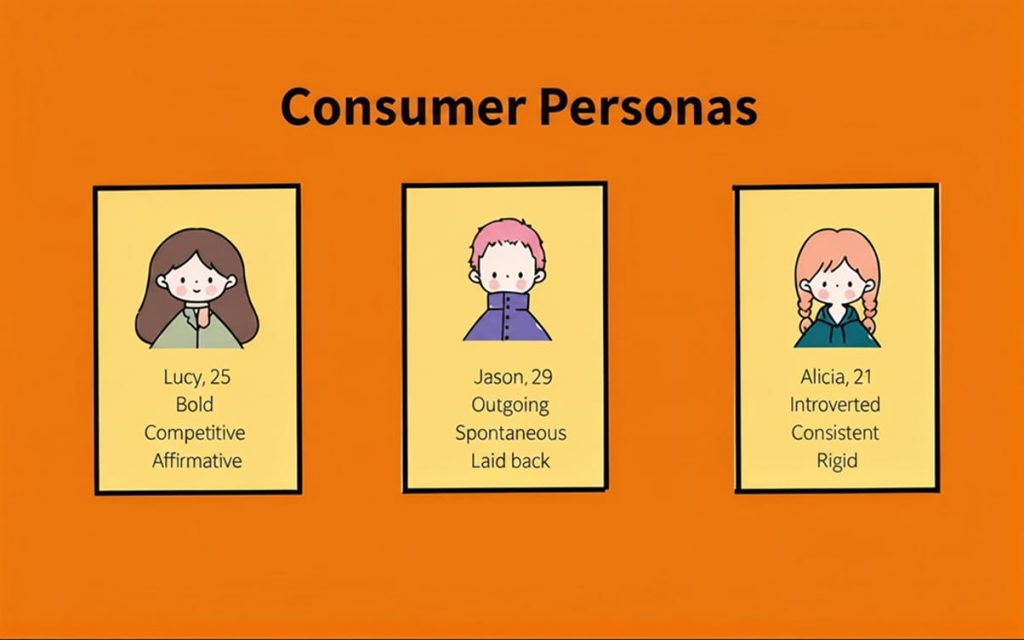
Creating Buyer Personas That Actually Drive ROI
A buyer persona only earns its place if it changes how you spend your budget or write your messaging. The goal isn’t to produce a detailed profile document; it’s to understand your audience well enough to reach the right people, with the right message, at the right moment.
Focus on the practical: What does your ideal customer search for before buying? What objections do they have? What content do they engage with? Your sales team is often the best source of this; they have real conversations with real prospects every day.
Check this out:
Source: Loop Digital
Segmentation: Where Targeting Precision Pays Off
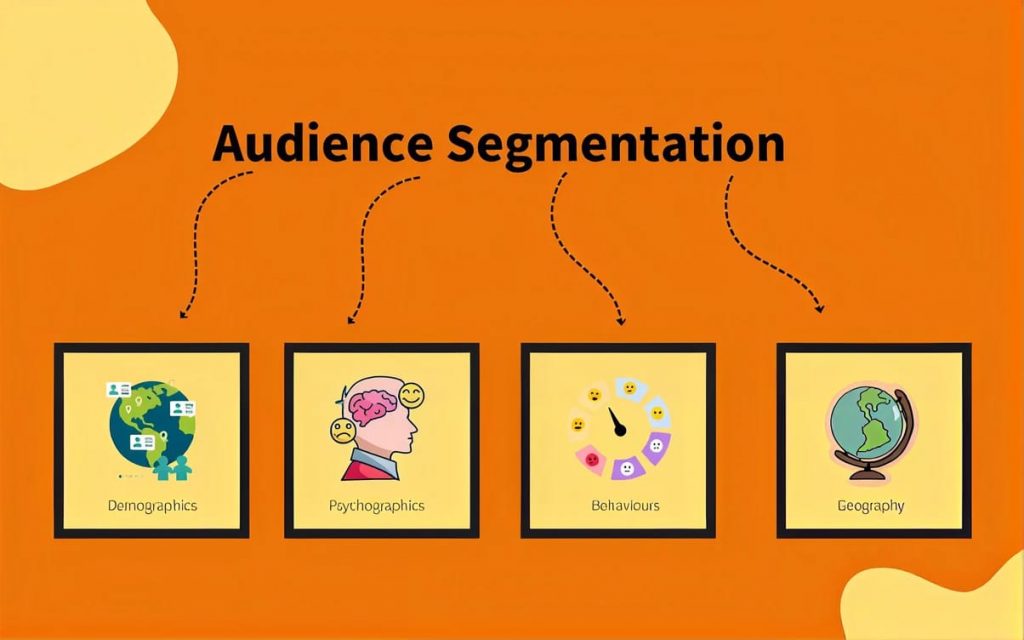
Once you understand your audience, segmentation is how you put that knowledge to work. Rather than sending the same message to everyone, you divide your audience into groups and tailor your approach to each one.
This isn’t just good practice, it’s measurably more effective. A retailer sending a targeted discount to cart abandoners will consistently outperform one sending the same offer to their entire list. The cost is the same; the return is significantly higher.
Useful segmentation variables include past purchase behaviour, engagement history, geographic location, and stage in the buying journey. The right split depends on your business, but the principle is consistent: the more relevant the message, the better the ROI.
Source: Loop Digital
Using Tools for Audience Analysis
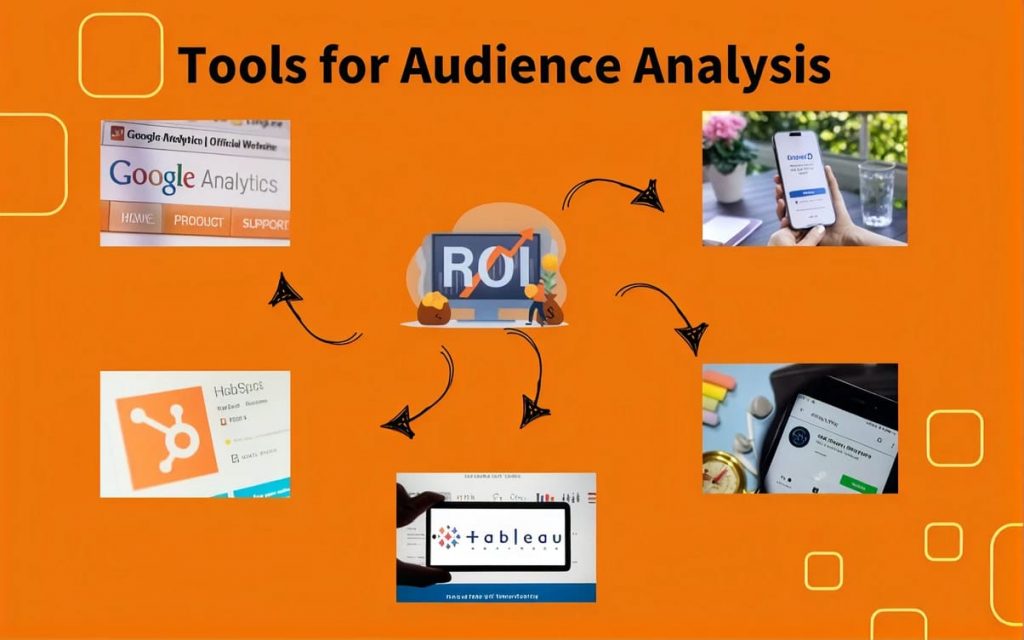
Several tools can provide valuable insights into your audience:
- Google Analytics: Offers comprehensive data on user behaviour, demographics, and website traffic.
- HubSpot: Provides insights into leads, customer interactions, and marketing campaign performance.
- LinkedIn Insights: Helps you understand the professional backgrounds and interests of your LinkedIn audience.
- IBM Watson Analytics: Employs natural language processing, allowing users to explore audience behaviour through intuitive visualisations.
- Tableau: Serves as an exceptional platform for visualising audience dynamics, enabling real-time interaction with the data.
Source: Loop Digital
3. Competitive Analysis
Understanding your competition is crucial for identifying opportunities to differentiate your brand and improve your marketing ROI. This section outlines the tools and techniques for analysing competitors’ digital marketing strategies.
Tools and Techniques for Analysing Competitors
- Identify Competitors: Start by identifying your main competitors in the UK market.
- Website Analysis: Analyse your competitors’ websites to determine their design, user experience, navigation, content, and functionality.
- SEO Analysis: Review their keyword rankings, backlink profiles, domain authority, and content strategy. Tools like Ahrefs and SEMrush can provide insights.
- Social Media Analysis: Evaluate their performance on social media platforms, their content, audience engagement, and advertising.
- Email Marketing Analysis: Subscribe to your competitors’ newsletters to study their emails, subject lines, and offers.
- Competitor Analysis Tools: Use tools like Ahrefs and SEMrush to gain insights into their top-performing pages and linked domains, allowing you to fine-tune your SEO strategy.
Identifying Gaps and Opportunities
By thoroughly analysing your competitors, you can identify gaps in their strategies and opportunities to outperform them. This might include targeting underserved audience segments, creating higher-quality content, or leveraging social media channels they are neglecting.
Example: If a UK-based fashion retailer notices that its competitor has a weak presence on Instagram, it could focus on building a strong Instagram presence with engaging visuals and influencer collaborations to attract a larger audience.
Ready to Uncover Your Growth Potential?
Don’t leave your marketing ROI to chance. Take the first step toward a more profitable digital presence today:
- Explore Our Range of Digital Audits: From deep-dive PPC and SEO reviews to our comprehensive Social Media audits, we’ll identify the “leaks” in your current funnel and provide actionable next steps.
- Book Your Free Consultation: Speak directly with a digital strategist to discuss your SMART goals and how we can tailor a roadmap to hit your 20% growth targets.
- Let our experts set up success for your digital marketing strategies. Meanwhile, why not take a look at our new wholesome guide on Guide to ROI-Driven Digital Marketing Strategies, so that you have an overview of why we do what we do!
Looking for your next opportunity?
Digital marketing careers
We’re always on the lookout for talented individuals to join our ever growing team. If you think you’d be a great match for Loop Digital, we’d love to hear from you.










Join 300+ business owners getting weekly growth strategies - subscribe now.
"*" indicates required fields